Free Shipping on all orders over $49 • $5.99 Flat Rate Shipping on orders under $49.



How to Set Up a Pico Reef

We all love giant tanks you can swim in, but there is also something special about tiny aquariums that look like you could simply pick them up and carry them into the next room. These are Pico Tanks: aquariums 7 gallons and under.
Tiny reef aquariums are among the most interesting displays in the hobby. They are excellent for people who travel, have a limited budget, or simply want a second tank for a desk or workspace. However, keeping a Pico Reef comes with its own unique considerations. Here are the key factors to keep in mind.
Tank Choices
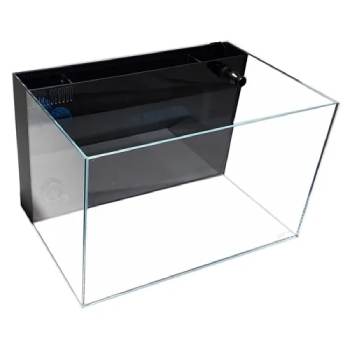
When picking a tank for your pico reef, there are a couple of considerations. In a pico-sized aquarium, any equipment hanging off the back is very noticeable—especially since pico tanks are often placed on desks or counters where they are viewed from all sides.
- AIO Tanks: Our preferred choice is an All-In-One (AIO) tank with a built-in filtration compartment. Lifegard offers some small Lifegard Aquatics Ultra Crystal Clear Aquariums. The ones with the black filtration compartment are recommended for pico displays. The filtration area hides your gear and gives the tank a clean look.
- Lid or Open Top: One major challenge with extra-small saltwater tanks is that evaporation quickly affects salinity. Because these tanks are often viewed "top-down" on countertops, an open-top tank is appealing, but it requires caution. If you go with an open top, you will definitely want to add an Auto Top-Off (ATO) system to eliminate salinity shifts caused by evaporation. Otherwise, a tight-fitting lid is highly recommended. The IceCap ATO EZ System is a great choice for pico tanks.
Livestock Choices
Pico tanks are a brilliant way to showcase small animals that might get lost in a larger system.
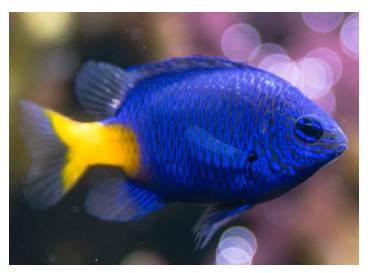
- Fish: We do not recommend putting fish in any marine tank under 5 gallons. If you want a fish, aim for a pico on the larger end of the scale. Our favorite choice is a single Damselfish. While they can be aggressive in community tanks, they are hardy, colorful, and easy to care for. When kept alone, their aggression isn't an issue. Yellow-tailed, Jeweled, Azure, Starkii, and Princess Damsels are all excellent candidates.
- Invertebrates: Smaller picos are ideal for displaying invertebrates such as decorator crabs, boxer crabs, harlequin shrimp, sexy shrimp, and squat lobsters. These animals often get lost in large tanks, but in a pico, you can easily find and enjoy them.
- Corals: These tanks are ideal for frags. Small soft corals, such as zoanthids, mushrooms, and Xenia, will quickly create a beautiful display. If the pico is a secondary tank, you can even stock it for free using trimmings from your main tank.
Gear Choices
Pico reefs are less dependent on high-tech gear and more dependent on regular water changes. For gear, you will need a filter, heater, light, and possibly a circulation pump.
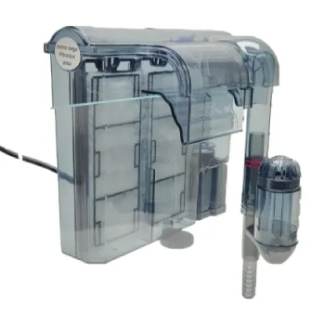
- Filter: You want a simple setup with mechanical filtration and carbon to keep the water polished. We recommend either the built-in AIO compartments in an AIO tank or a Lifegard HOF (Hang-On-Filter) Aquarium Power Filter. These filters include filter floss and carbon, as well as a surface skimmer to prevent oily buildup on the water’s surface. Don’t be afraid to use a filter rated for a larger tank; the extra flow is a plus, and the Lifegard filters have flow controls to stop sandstorms.
- Heater: To keep temperatures stable, we like Lifegard Aquatics Pre-Set Quartz Glass Aquarium Heaters. They are extra small and preset to 78°F—just drop them into the tank or an AIO chamber and plug them in.
- Light: You need a reef-spectrum light to help your corals grow and glow, but it doesn’t need to be incredibly intense since pico tanks are shallow. The Reef Brite Lumi Lite Pro 12in and Reef Brite Lumi Lite Pro 18in are great options. For a premium choice, the Kessil A80 Tuna Blueoffers beautiful shimmer in a tiny package.
- Pump: In most picos, the filter provides enough flow. If you need more, you can upgrade the AIO return pump to a small Lifegard Aquatics Quiet One DC Pumps, which features built-in wave modes to act as a wavemaker. If you need a dedicated circulation pump, the Koralia Nano Evolution Pump is a good choice.
Maintenance

The "secret" to a successful pico reef is weekly large water changes. Doing a 3-gallon water change on a 6-gallon tank usually takes less than 15 minutes.
Along with water changes, you'll need to clean the glass (the Two Little Fishies NanoMag Magnetic Window Cleaning Device is the perfect tool for this) and replace your filter media regularly. Avoid using water supplements; in such a small volume, it is far too easy to overdose. It is much safer to rely on your salt mix to replenish minerals through water changes.
Finally, remember that top-offs are crucial. Even a small amount of evaporation can cause a dangerous spike in salinity. A cheap ATO and a standard water jug may give you enough top-off water to last a month.