Free Shipping on all orders over $49 • $5.99 Flat Rate Shipping on orders under $49.



by Jaron Hudson, [email protected], 10/19/2026
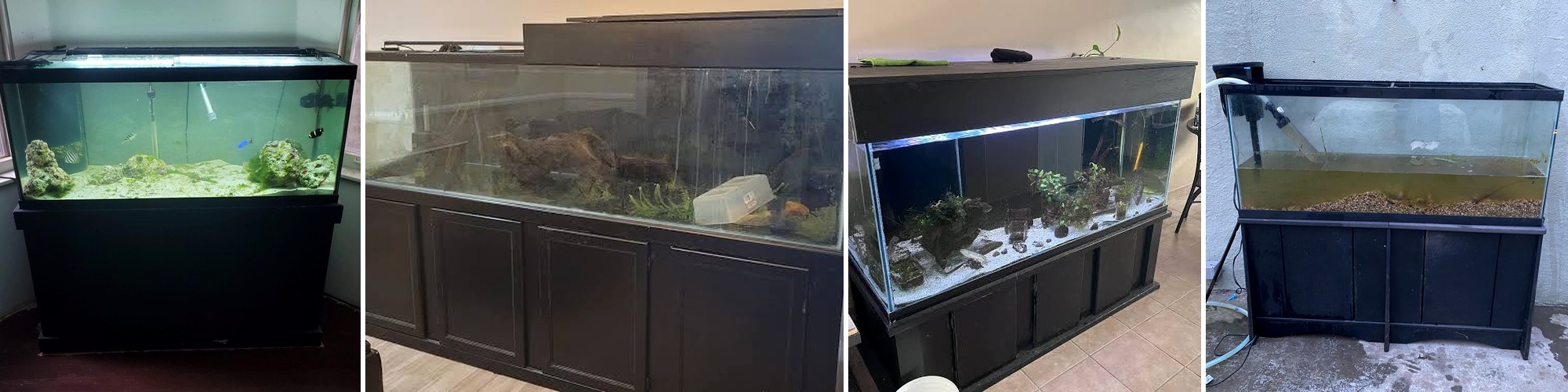
The aquarium hobby can be very expensive. One of the best ways to save a decent amount of money is purchasing a used aquarium rather than a brand-new one. You can often buy used aquariums cheaply from people who are moving, upgrading, or getting out of the hobby. Facebook Marketplace, Craigslist, eBay and the local fish store are great places to find used aquariums.
We’ll focus on glass aquariums. Glass aquariums are made from the same glass used in everyday windows and glass doors. It can be hard to tell the difference between high-quality acrylic and true glass by sight alone. Glass feels much harder and more solid than the resin used in acrylic aquariums. Glass aquariums also use silicone sealant in the corners to join the panels. In contrast, acrylic aquariums are welded together without sealant.
With glass aquariums, check the age, seals, bracing, and for scratches. If a stand is included, you will also want to make sure it is adequate.
NOTE: We do not sell used aquariums or any used products. However, we would love to sell you some new products to go with your used glass aquarium.
Checking Tank Age
Glass aquariums can last a long time. However, that doesn’t mean they last forever. The silicone sealant on most well-constructed glass aquariums lasts only about 20 years. If the tank you are looking at is already 15 years old and you want to keep it long term, you will want a newer tank. Aiming for a tank that is only a few years old will help you get more use out of it. It can save you the stress of it succumbing to age and creating an emergency where your fish have no tank.
You can find an aquarium's age by asking the owner or locating the manufacture date on the tank. The most common location for the manufacture date is on the bottom of the aquarium, inside the tank overflow box, or inside the tank’s rim underneath the top trim.
Checking Seals
Even if a tank is reasonably new, you always want to double-check the silicone seals. Neglect, age, and certain medications can cause issues with aquarium seals. The aquarium’s silicone should be clear or black. Discoloration, such as yellowing or graying seals, can indicate the silicone has absorbed medications. These medications will be released back into the water slowly over time, poisoning certain animals.
Silicone seals should be uniform and free of bubbles or nicks. This indicates the seal is not in full contact with both pieces of glass. This can be a manufacturing defect or a sign of damage and age. No matter the reason, even a tiny bubble can quickly expand, burst, and cause the entire tank to fall apart. It is easiest to check for irregularities by looking through the glass down at the silicone rather than from the side. The clear glass lets you easily see any damage in the silicone.
Checking Bracing
Many glass aquariums, especially larger ones, have plastic or glass bracing either around the perimeter of the aquarium or across the top. This bracing is needed to maintain the aquarium's structural integrity. It is very common to find aquariums where the bracing has been removed or damaged. Never buy an aquarium without the original bracing. The tank's life will be greatly shortened because of the excessive stress placed on the aquarium sealant.
Many aquariums are designed without bracing, and manufacturers use thicker material to compensate. However, tanks designed with bracing were never intended to hold together without it. Always ask the seller if the bracing was removed or look up the original manufacturing specifications.
Checking for Scratches
Glass tanks scratch less than acrylic tanks, but they still can scratch. Once a scratch is in glass, it can't be repaired. Often, when the tank is dirty, empty, and dimly lit, it can be hard to see scratches, but once the tank is filled and lit with bright aquarium light, the scratches will be more visible. These blemishes can ruin the vanity of a beautiful tank. Bring a flashlight when looking at used tanks. Hold the light on the side of the glass panels to help you identify any scratches and decide whether they are acceptable to you. Some scratches are to be expected with used aquariums. It is up to personal preference to decide whether they're aesthetically acceptable for your display.
Checking the Stand
While the stand isn’t part of the aquarium, stands often come with aquariums, and getting a proper stand is critical to the longevity of an aquarium. Aquariums should always be evenly supported across the bottom glass or bottom trim. Stands that aren’t level or have uneven surfaces create pressure points that put abnormal stress on parts of the aquarium. This can lead to premature catastrophic failures, such as broken glass or seals, which can send water out of the tank and all over your floor. Avoid any stand that has significant water damage, bowing, or warping. Bring a level to check the stand and ensure that it is flat before making your purchase.