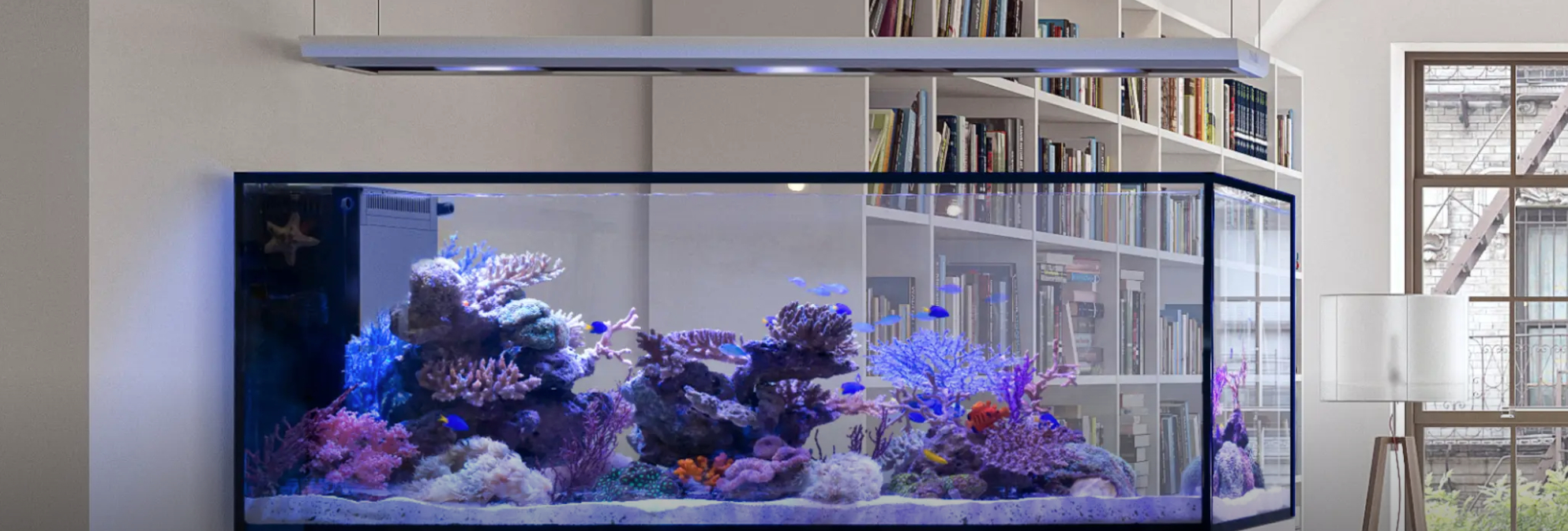
If you are a reef aquarium owner, you have almost certainly dreamed of having a tank you could swim in. We love aquariums, and in the eyes of most enthusiasts, bigger is better. However, watching video spotlights or reading "Tank of the Month" articles can be intimidating. Some large home reefs have dedicated equipment rooms and maintenance performed in SCUBA gear.
The good news? Large tanks do not need to be that complicated. We are going to focus on special considerations for reef aquariums between 300 and 2,000 gallons. This range is larger than an "off-the-shelf" tank, but not so massive that it requires an on-site structural build into your home. Having maintained and installed systems in this size range, here are the unique factors you need to consider.
Physical Logistics: Getting It Inside
The first hurdle is the logistics of getting the aquarium into your home. Tanks up to 2,000 gallons can often be moved into a house with manual labor, depending on the dimensions and access points. Homes with double doors or removable sliding glass doors offer the best entry.
Keep in mind that the aquarium doesn’t just need to fit into the home, but into the final installation location. Generally, this is best at ground level. Moving a tank of this size up or down stairs is difficult, if not impossible.
Weight and Foundation
An extra-large aquarium’s filled weight is immense. Not all floors can support it. If you are unsure of your floor’s load-bearing capacity, it is worth hiring a structural engineer to confirm the limits and suggest reinforcements. If you live in the Southwestern U.S., as we do, you likely have a concrete slab foundation, which makes ground-floor installations much simpler.
The Material Choice: Acrylic vs. Glass
A 700-gallon acrylic tank can be moved with manual labor, but a glass tank of the same size is impossible to install without a forklift or crane. Given that a tank of this size will likely stay in place for decades, acrylic is the superior choice. We recommend acrylic for anything over 300 gallons; it is more structurally sound, easier to install, and more durable than glass.
Infrastructure: Power, Water, and Drainage
Large tanks require significant electricity and drainage. While this doesn’t mean that you need a full home renovation, there are critical upgrades to consider:
- Electrical: A standard 15-amp home circuit is rarely enough. We recommend multiple dedicated 20-amp GFCI-protected circuits. Multiple circuits provide redundancy; if one trips, the other keeps your life-support gear running.
- Drainage: A city drain is sufficient, but never drain saltwater into a septic tank, as it can be incredibly destructive to the system. If you are in a rural area with a septic tank, you will need a dedicated method for saltwater disposal.
- Water Supply: You will need a dedicated mixing station with containers large enough for a 25% water change. Since these are often kept in a garage or remote storage area, use a high-pressure pump (like an Iwaki) to pump clean water to your display.
Gear And Sizing
For a large system, stick to readily available, "off-the-shelf" gear whenever possible. If a pump fails, sourcing a replacement or spare parts is much easier than for custom-made equipment.
The one exception is the sump. Most acrylic manufacturers will build a custom sump to pair with your tank. Since a sump has no moving parts to "wear out," going custom here is a safe bet.
Lighting and Flow
General "rules of thumb" for small tanks often break down at this scale:
- Lighting: In a deep tank (over 3 feet), hitting high PAR numbers on the sand can lead to "hot spots" at the top that bleach coral. When stepping up from a 2 ft tall tank to a 4 ft tall tank you may only need 50% more light even though the water volume has doubled. Doubling the light will lead to extreme par levels at the surface that will make the top of the tank unsuitable for most corals.
- Flow: A "40x turnover" rule works for 100 gallons, but 40,000 GPH in a 1,000-gallon tank can create sandstorms and peel coral tissue. Instead, aim for 20x turnover. Four to 6,000 GPH pumps are usually sufficient for a 1,000-gallon mixed reef.
Maintenance and Water Changes
Large tanks require the same care as small ones, but the tools change:
- Industrial Magnet Cleaners: Cleaning a 10-foot long, 4-foot tall tank with a scrub pad is exhausting. Invest in a heavy-duty magnet (like a large Mag-Float) designed for thick acrylic.
- Extra-Long Siphons: A standard 16-inch gravel vac won't reach the bottom of a 4-foot-deep tank. Get a 3 to 4 ft siphon from Python.
- Aquarium Tongs: If the tank is deep, you’ll need "grabbers" (like Tunze Aquarium Tongs) to pick up dropped items or move corals without diving in.
A Note on Water Changes: In large systems, focus on cleaning the sand rather than hitting a specific percentage. To clean the sand in a 150-gallon tank, you might need to drain 20% of the water. In a 500-gallon tank, that same cleaning might only require a 10% volume drop. In massive systems, it is easier and more cost-effective to balance chemistry through filtration and supplementation rather than relying on massive, expensive water changes.