|
Test
|
Reason To Test
|
Test
Frequency
|
Acceptable
Range
|
pH
-Milwaukee pH Meters/Controllers -American Marine Pinpoint pH Monitor
-Aquarium Systems pH Test Kit
-Red Sea Alkalinity/pH Test Lab
|
Maintaining correct pH is critical. Low pH will lead to pH shock and the death of your fish and corals. To raise your pH to an acceptable level use a buffer such as Inland Seas Marine and Reef Buffer.
Electronic pH meters, such as the Milwaukee Aquarium pH Meters are far more accurate than the chemical test kits.
|
A couple times a week
|
8.15-8.4
|
Alkalinity
-Red Sea Alkalinity/pH Test Lab
-Aquarium Systems Alkalinity Test Kit
|
Alkalinity is a measure of the acid buffering capacity of your tank water. (In other words, a measure of the ability of a solution to resist a decrease in pH when acids are added.) Since the biological action of the reef tank contents will produce acids, alkalinity in a closed system has a natural tendency to go down. Correct alkalinity levels allow hard corals and coralline algae to properly secrete new skeletal material. When alkalinity levels drop, the carbonate ions needed are not available and the process slows or stops. A buffer such as Inland Seas Marine and Reef Buffer will help you maintain your alkalinity.
|
A couple times a week
|
2.5-5.0 meq/l
|
Ammonia
-Red Sea Ammonia Test Lab
-Aquarium Systems Ammonia/Nitrite Test Kit
|
Elevated ammonia levels typically result from not cleaning the filter frequently enough or having inadequate filtration.
|
During the tank-cycling phase an ammonia test should be performed daily. After the cycling phase, test every 2-3 weeks. Additionally, test when there are unexplained fish deaths to see if the deaths are caused by high ammonia levels.
|
0.0 ppm
NOTE: If your test kit detects any ammonia--that is too much. At concentrations as low as .2-.5 ppm (for some fish), ammonia causes rapid death. Even at levels above 0.01-0.02 ppm, fish will be stressed. Take corrective action immediately by doing large water changes and identifying the source of the problem.
|
Nitrite
-Red Sea Nitrite Test Lab
-Aquarium Systems Ammonia/Nitrite Test Kit
|
The only time a nitrite kit provides information that an ammonia kit can't is while testing for completion of the second phase of the nitrogen cycle. As in the case for ammonia, if your test kits detects nitrite, your biological filter is not working adequately. Once a tank has cycled, nitrite kits are pretty much useless. (If the bio filter in an established tank isn't working, both ammonia and nitrite levels will be elevated.)
|
Test daily during tank cycling
|
0.0-0.01 ppm
At levels above .5 ppm, fish become stressed. At 10-20 ppm, concentrations become lethal.
|
Nitrate
-Red Sea Nitrate Test Lab
-Aquarium Systems Nitrate/Phosphate Test Kit
|
Nitrate levels increase over time in established tanks as the end result of the nitrogen cycle. (Some reef tanks may be able to consume nitrogen faster than it is produced.) Because nitrates become toxic at high concentrations, they must be removed periodically (i.e., through regular water changes). Having a nitrate test kit helps you determine whether or not your water changes are removing nitrates quickly enough.
Nitrates become toxic to fish (and plants) at levels of 50-300 ppm, depending on the fish species.
|
Once per week
|
Less than 0.25 ppm is strongly recommended.
|
Calcium Hardness
-Aquarium Systems Calcium Test Kit -Red Sea Calcium Test Lab -American Marine PinPoint Calcium Monitor
|
Corals, crustaceans, mollusks and calcareous algae all extract calcium from seawater and use it to construct their skeletons from calcium carbonate. Calcium can be controlled using kalkwasser (also called limewater).
|
Once every 1-2 weeks
|
400-475 mg/L
|
Phosphate
-Aquarium Systems Nitrate/Phosphate Test Kit
-Red Sea Phosphate Test Lab
|
Compounds containing phosphorus and oxygen are called phosphates, and they occur in all living things. The accumulation of phosphates is a factor leading to the growth of algae. The easiest way to eliminate phosphate is to never introduce it into the system. Most tap water contains high levels of phosphates. Using RO (Reverse Osmosis) water will reduce phosphates to acceptable levels. RO water can be purchased at aquarium stores or produced at home with an RO System.
|
Once per week.
|
0.05-0.1 ppm
|
Dissolved
Oxygen
-Milwaukee SM600 Dissolved Oxygen Meter
|
A tank with adequate aeration should have an adequate amount of dissolved oxygen. Aeration is provided by water movement and surface area at the top exposed to air. Testing for dissolved oxygen is more for advanced aquarists. Chemical dissolved oxygen test kits are not particularly accurate and consequently we does not sell them. However, we do sell an accurate electronic meter, the Milwaukee SM600 Dissolved Oxygen Meter. |
Once per week.
|
Greater than 6.9 mg/L
|
Specific Gravity (Salinity)
-Hydrometers -Refractometers -American Marine PinPoint Salinity Monitor
|
Specific gravity, or salinity, is a indirect measurement of the quantity of dissolved salts in water and is measured with a hydrometer. A quick change in salinity can cause a shock to fish and corals.
|
Weekly
|
1.023-1.025
|
Temperature
-Thermometers
|
Corals come from different regions in the world with ocean temperatures ranging from 72 degrees to 92 degrees. To be safe most aquarists keep their tank between 75-80 degrees. However, some aquarists have very successful tanks with temperatures up to 82 degrees.
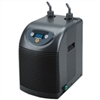
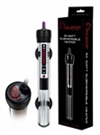
Fluctuating tank temperatures can be more of a threat to a tank than high temperatures. If your tank varies more than four degrees, up or down, you can add a chiller or heater.
|
Daily
|
75°-80°F (24°-27°C),
with 77°F (25°C)
being a good
midpoint
|